hushlink: zero-knowledge one-time secret sharing
a zero-knowledge secret sharing web app — AES-256-GCM encrypted in the browser, stored in DynamoDB, destroyed on first read
A personal project for sharing secrets safely — passwords, API keys, .env files — without leaving them in chat logs or email threads. The core constraint: the server never sees the plaintext, and the secret is gone the moment it is read.
key features
- AES-256-GCM encryption entirely in the browser before anything hits the server
- One-time retrieval — DynamoDB
DeleteCommandwithReturnValues: ALL_OLDis the fetch - Split-delivery UX: link and decryption code sent through separate channels
- Optional password layer wrapping the encryption key (key-wrapping via a second PBKDF2 + AES-GCM pass)
- Decoy credentials stored alongside real secrets for plausible deniability
- API key support with elevated rate limits for programmatic use
- DynamoDB atomic counters for per-IP and per-key rate limiting that survive cold starts
tech stack
# core
next.js 15 | react 19 | typescript | vercel
# storage & auth
aws dynamodb | iam role auth | api key management# crypto
web crypto api | pbkdf2 | aes-256-gcm | crockford base32how it works
Encryption (lib/crypto.ts): The browser generates a random 32-byte salt and 12-byte IV, derives an AES-256-GCM key from a Crockford base32 code using PBKDF2 at 310,000 iterations, and encrypts the plaintext. If a password is set, the content key is exported, encrypted with a second password-derived key, and the wrapped key travels alongside the ciphertext. The server receives only base64-encoded ciphertext — never the code, never the password, never the plaintext.
Code generation (lib/constants.ts): A 16-character Crockford base32 code (80 bits of entropy, formatted XXXX-XXXX-XXXX-XXXX) is generated client-side via crypto.getRandomValues. Crockford’s alphabet drops I, L, O, U to prevent visual misreads.
Storage (app/api/secret/route.ts): A PutCommand with ConditionExpression: "attribute_not_exists(pk)" prevents ID collisions. Secrets are stored with a DynamoDB TTL for automatic expiry. A separate decoy item (hld:{id}) stores fake credentials so that a consumed link returns plausible-looking data rather than an empty 404.
Retrieval: A single DeleteCommand with ReturnValues: ALL_OLD atomically fetches and destroys the record in one operation — no race condition where two concurrent readers both succeed.
Rate limiting: Per-IP and per-key limits use DynamoDB UpdateCommand with an atomic ADD expression. The window key is rl:{ip}:{action}:{minute}. API key holders get 6× higher limits. The implementation fails open on DynamoDB errors — availability over perfect enforcement.
Two-step share UX (components/ShareView.tsx): After encryption, the sender must copy the link before the code is shown. The “Continue” button is disabled until the link is copied. Once the code is copied, a 60-second timer auto-clears the clipboard, and a visibilitychange listener wipes it immediately if the tab is hidden.
API keys (lib/apikeys.ts): Keys are 160-bit hex values prefixed hl_, stored as SHA-256 hashes in DynamoDB. Validation is a hash lookup — the raw key never persists anywhere.
highlights
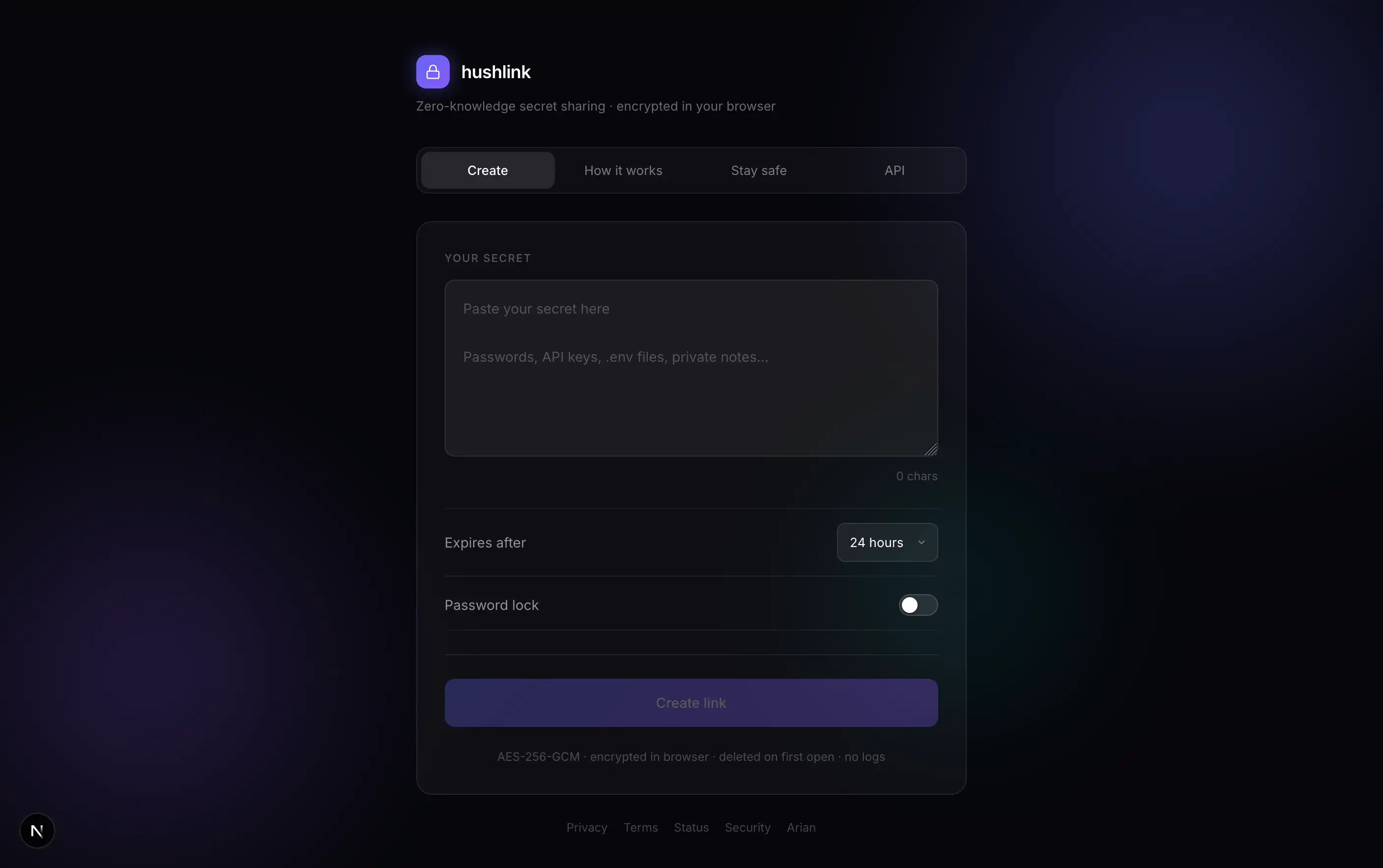
create tab — secret input form
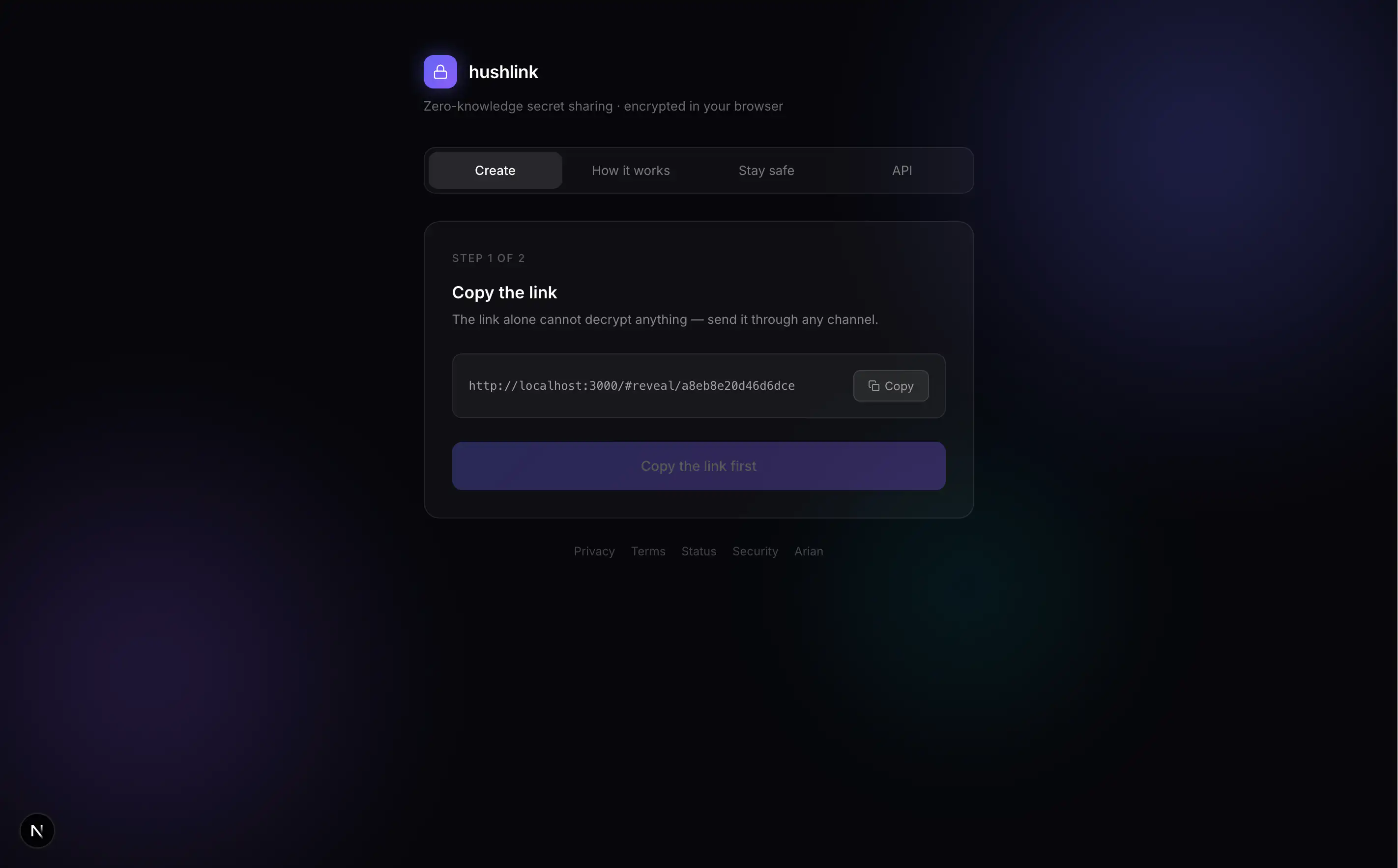
step 1 of 2 — copy the link (not yet copied)
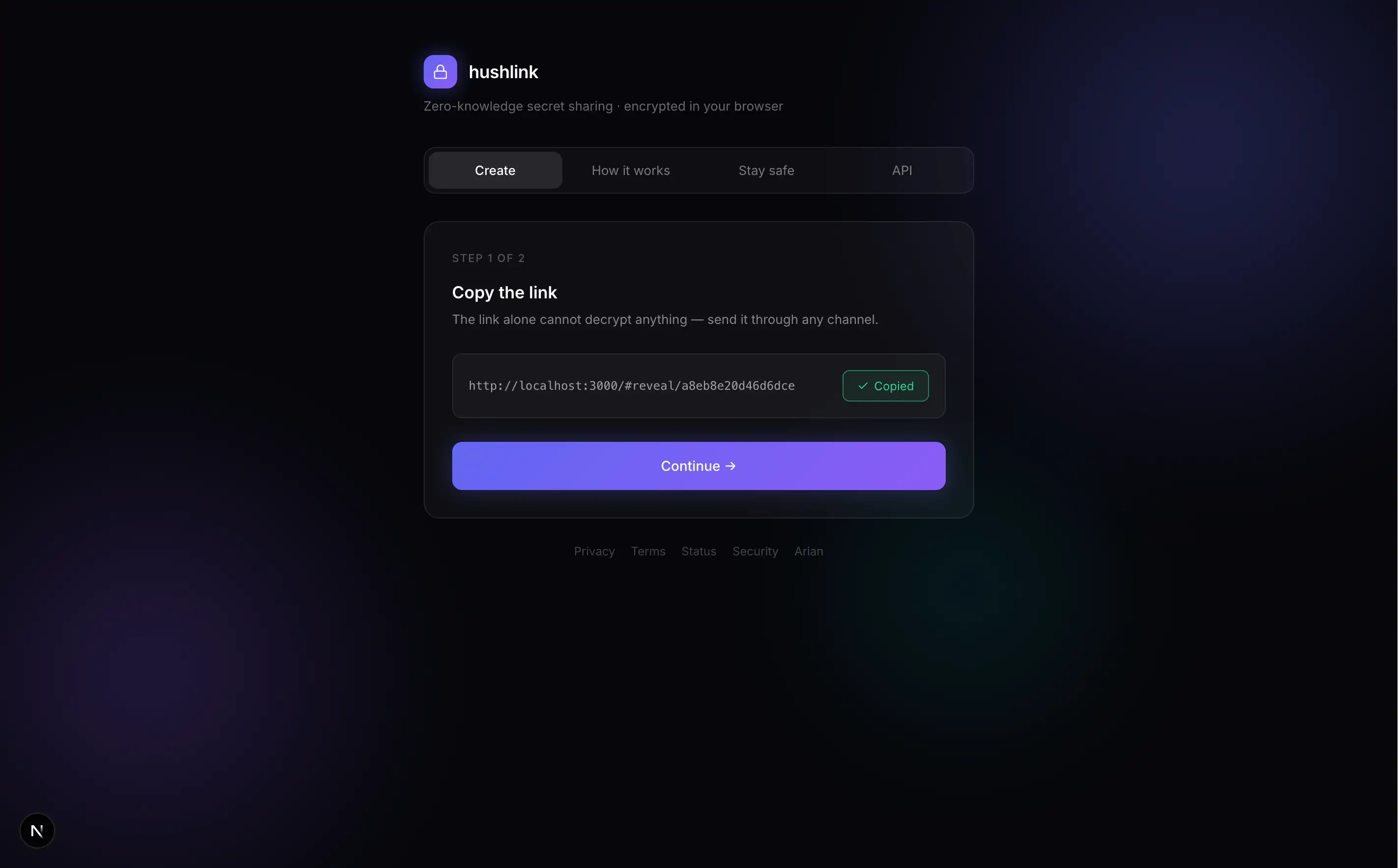
step 1 of 2 — copy the link (copied, continue unlocked)
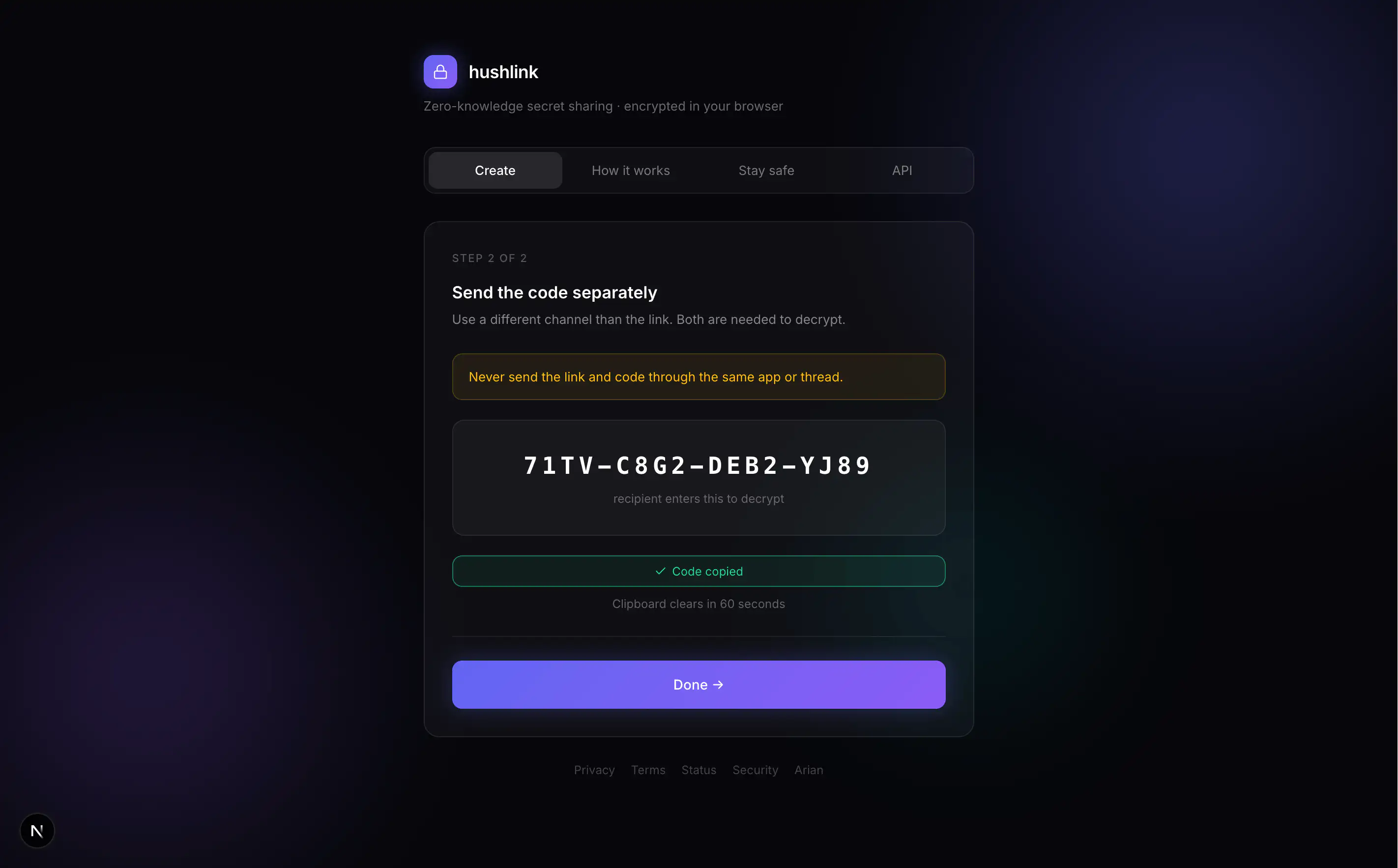
step 2 of 2 — send the code separately
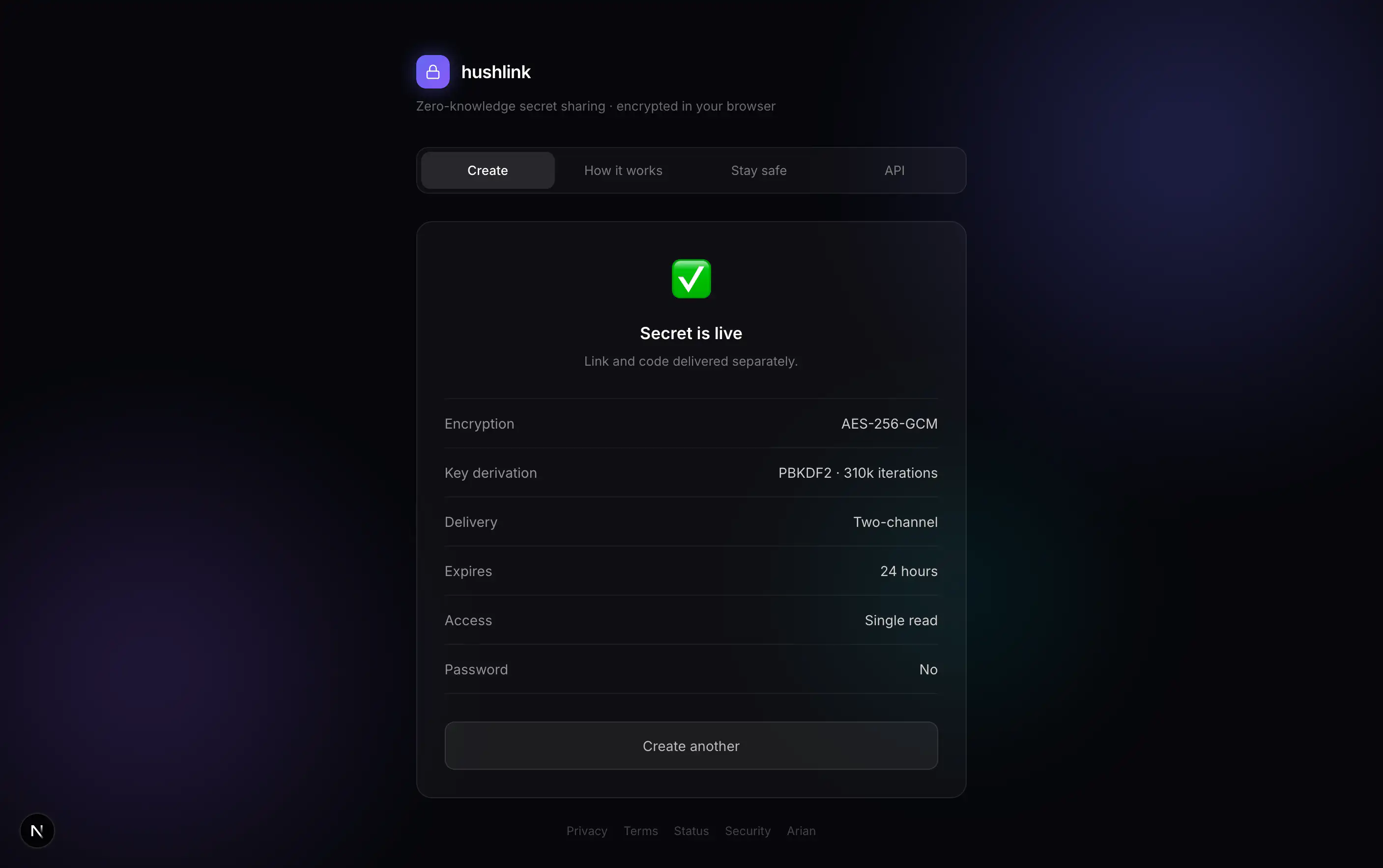
secret is live — encryption summary

how it works tab
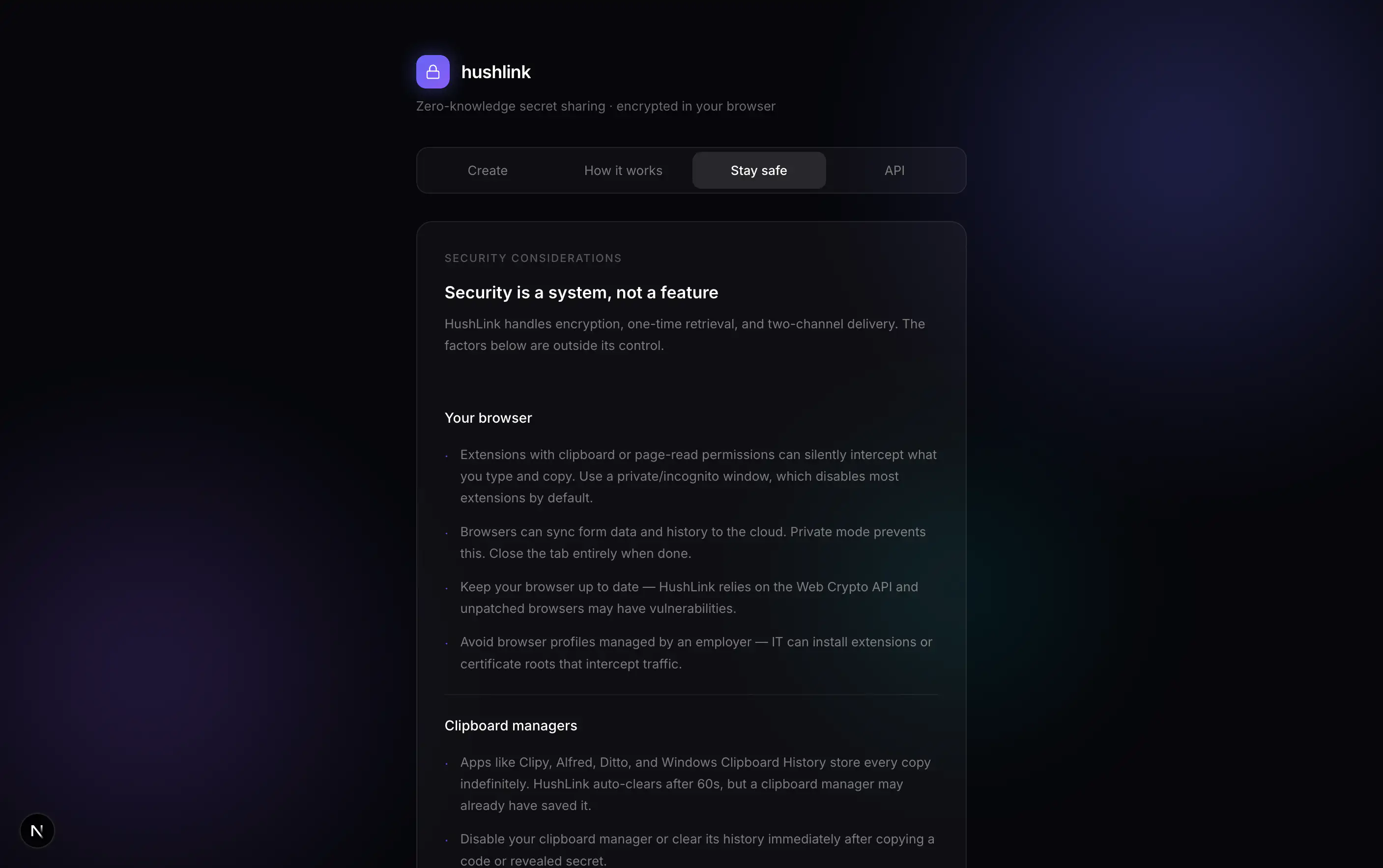
stay safe tab — security considerations
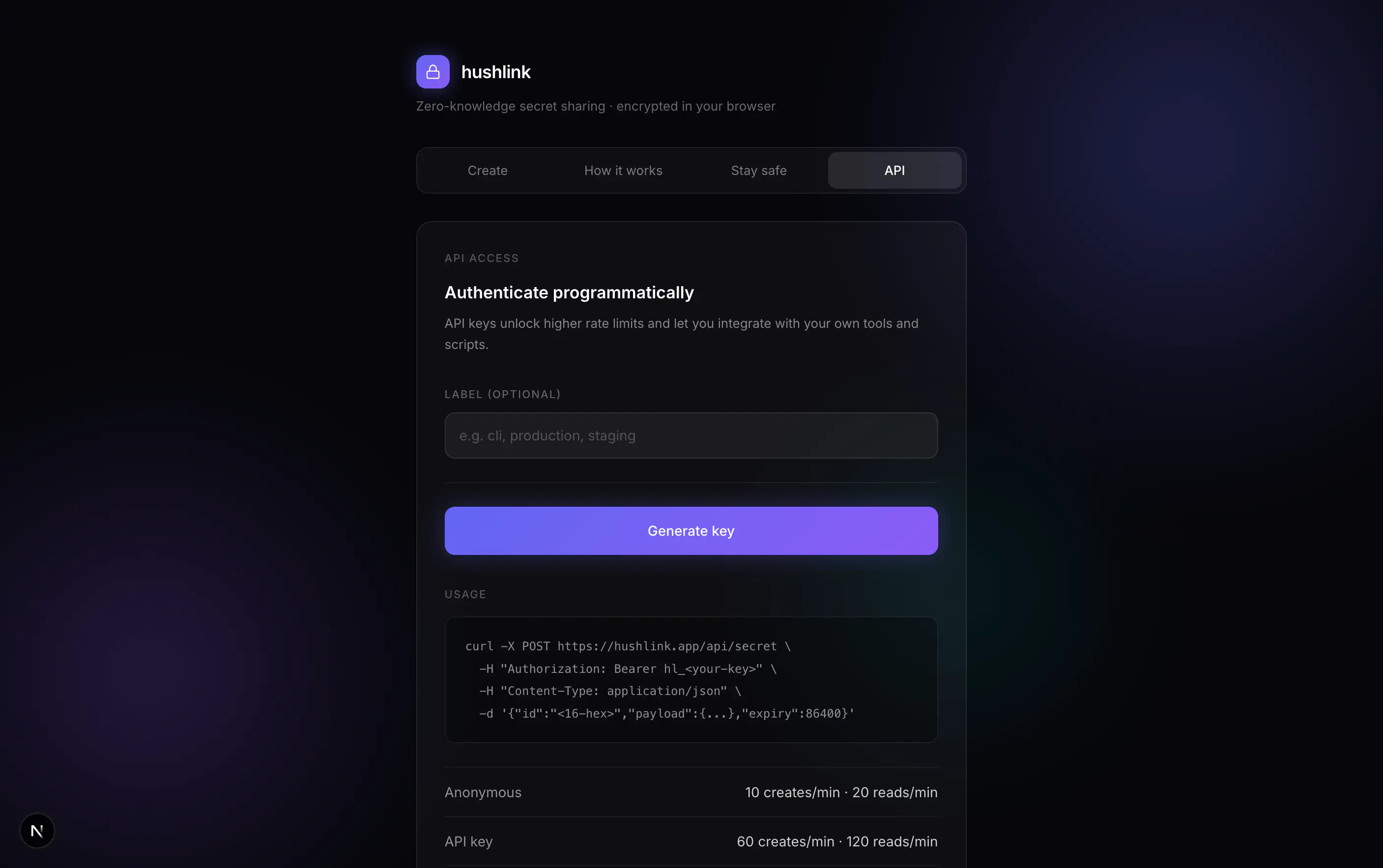
api tab — key generation and rate limits
The split-delivery pattern is the whole point of the UX. A link alone reveals nothing — it contains only the encrypted blob ID. A code alone is useless without the ciphertext. Both are required, and the UI enforces sending them separately by gating each step.
The decoy system was an interesting addition. When a secret has already been read, the API returns { found: false, decoy: "DATABASE_URL=..." } — a randomly selected fake credential string. A recipient who forwards the link to someone else sees plausible-looking data rather than a blank error, which makes the one-time nature less obvious to casual snooping.
The key-wrapping for password protection required some care. The content key is derived from the random code (not the password), which keeps the code as the primary decryption factor. The password wraps the exported content key separately. Decrypt flow: derive password key → unwrap content key → decrypt ciphertext. This means the password alone cannot decrypt anything without the code, and vice versa.
Using DynamoDB’s DeleteCommand with ReturnValues: ALL_OLD for the fetch-and-delete turned out to be exactly the right primitive. It is atomic by design, requires no transactions or conditional writes, and returns the data in the same call. Redis GETDEL is the more common choice for this pattern, but DynamoDB handles it just as cleanly with TTL-based expiry built in.